The environmental impact of global tourism has come under scrutiny in recent years, presenting an era-defining challenge for the hospitality industry. How can exceptional guest experiences be delivered while minimizing their environmental impact?
The answer lies in the development of circular-economy hotels, which aim to reshape how the industry utilizes resources, designs spaces, and measures business success.
Circular-economy hotel practices differ radically from traditional “take-make-dispose” models. The aim is to reduce waste and extend the life of materials by designing operations that mimic nature’s closed-loop systems. In addition to being environmentally friendly, sustainable hotel models can also deliver a genuine competitive advantage.
Let’s look at how circular-economy hotels are putting these principles into action.
What Is the Circular Economy and Why Does It Matter in Hospitality?
The circular economy is an economic model that prioritizes the reuse of resources and minimizes waste. It achieves this by slowing, closing, and narrowing energy and materials loops (Geissdoerfer et al., 2017).
The Ellen MacArthur Foundation defines the circular economy through three key principles:
- Eliminate waste and pollution
- Circulate products and materials at their highest value
- Regenerate natural systems
Taken together, these help reduce costs and a company’s environmental footprint. When applied to hospitality management, this can deliver significant benefits to businesses, reimagining how hotels are built, operated, and experienced by guests. Sustainable hotel models go well beyond recycling to transform everything from procurement to guest interaction.
Some examples of circular practices in hotels and hospitality include:
- Circular hotel design: Existing buildings are reimagined and creatively adapted for reuse, rather than investing in new constructions.
- Zero waste hotels: Waste is radically reduced to practically zero. This will often incorporate on-site composting, food waste tracking, and circular kitchen operations.
- Energy efficiency in hotels: A range of hotel energy efficiency measures can significantly reduce energy consumption and costs. This might include LED systems, smart temperature controls, and the integration of renewable energy.
- Hotel waste management solutions: Introduction of sustainable practices such as buying toiletries in bulk, recycled furnishing, and textile repurposing.
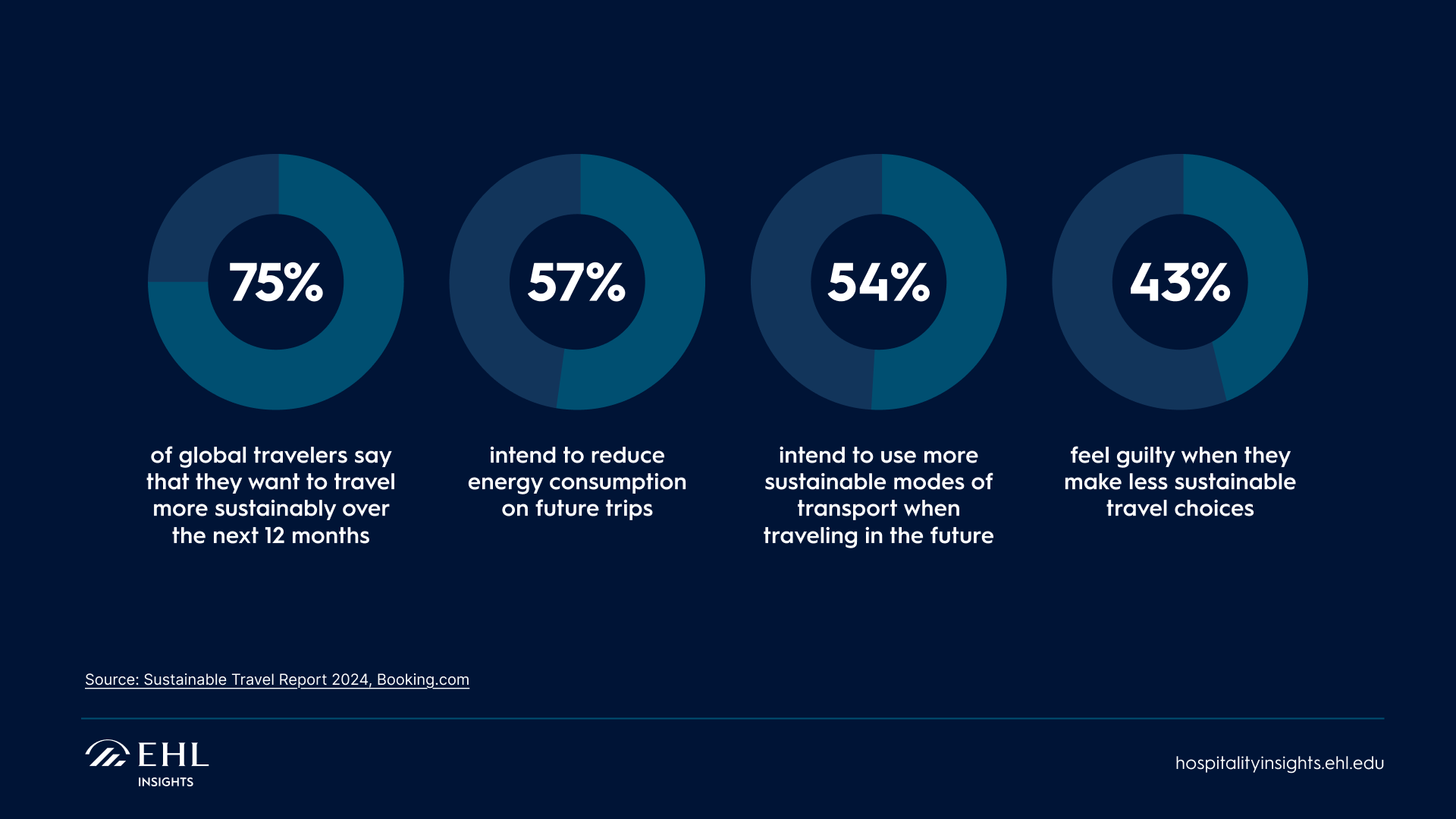
By adopting a range of circular practices, hospitality companies can not only reduce costs but also create positive ripples by demonstrating what is possible. According to Booking.com’s Sustainable Travel Report 2024, 67% of global travelers say that seeing sustainable practices in action during a trip can inspire them to adopt greener habits at home.
The Business Case for Circular Economy Hotels
Circularity isn’t just an ethical add-on; it’s also profitable. Research into circular economy hotel practices found that regenerative strategies can deliver long-term value through:
Operational Cost Savings
Implementing circular economy practices can deliver significant cost reductions for businesses. A whitepaper from IHG demonstrated that adopting net-zero carbon strategies in existing hotels can yield substantial savings over time, particularly in energy.
Increased Consumer Demand
With growing public awareness of ‘overtourism’ and environmental impact, consumer preferences are shifting toward sustainability. The 2024 Sustainable Travel Report from Booking.com found that a significant percentage of travelers are now seeking accommodations that prioritize environmentally friendly practices. This could indicate a potential for increased bookings and revenue for sustainable hotels.
Brand Differentiation
Leaders in sustainability can incorporate a green, circular approach into their branding, helping them differentiate from competitors. This helps them reach the growing number of travelers looking for sustainable options.
Access to Green Financing
Hotels that prioritize sustainability can access green financing options. The Sustainable Hospitality Alliance’s report identifies how sustainable hotel design and operations can open the door to ESG-linked loans and green bonds. Investing in circular-economy hotel practices can enable businesses to leverage financial incentives.
Producer Perspective: How To Evaluate Circular Economy Hotel Practices
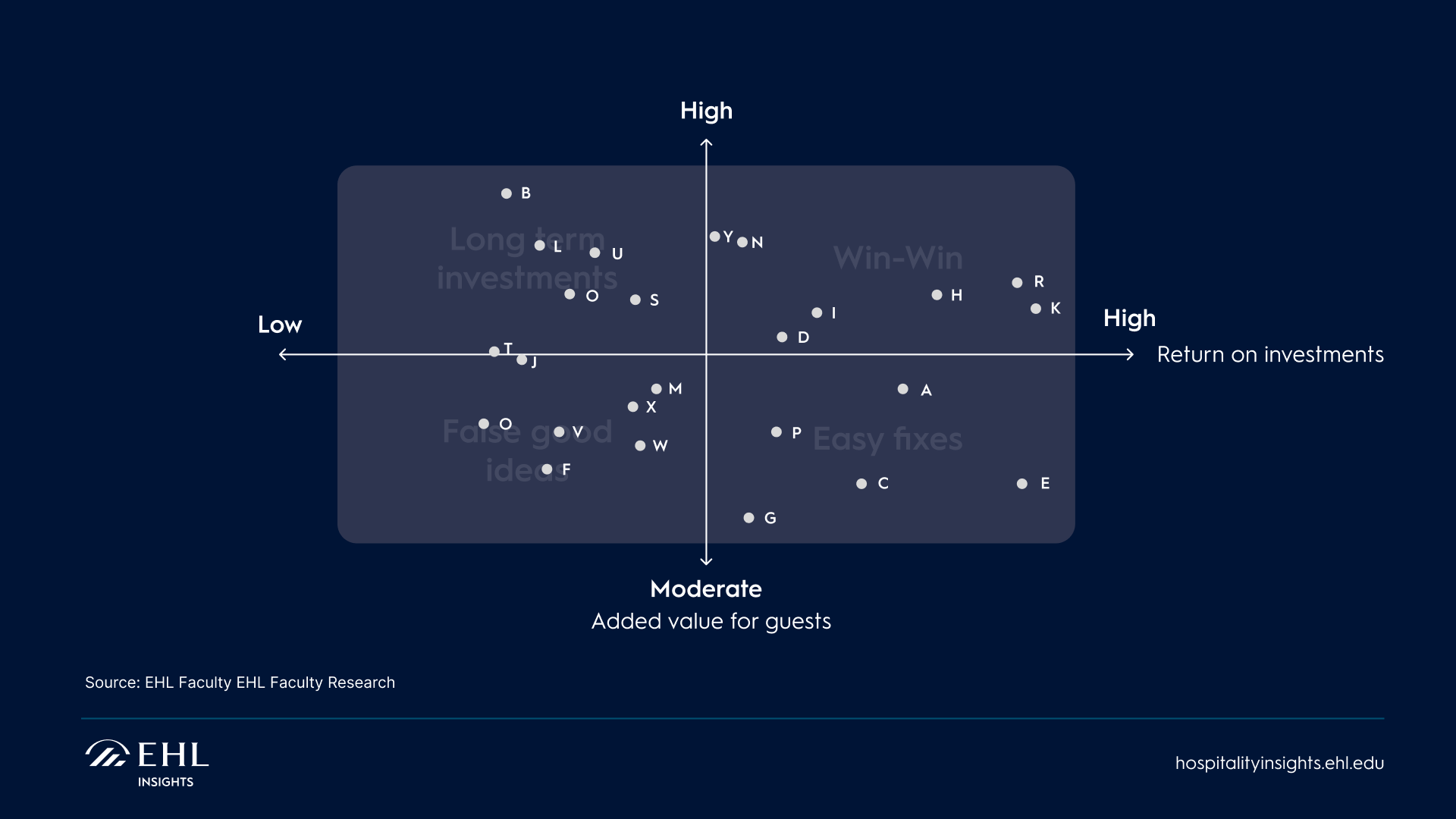
The EHL Hospitality Business School faculty reviewed 25 specific circular economy hotel practices, asking hotel managers and industry experts to rate each on five criteria: feasibility, implementation cost, operational savings, impact on guest perception, and revenue per client.
Our survey revealed a clear trade-off for hospitality managers:
Practices that require a low or no initial investment, such as reducing the frequency of room clearing or offering fewer complimentary extras, can save costs, but their impact on guest perception is negligible.
On the other hand, practices that can strongly influence guest perception, such as cooking with on-site produce or using self-generated energy in hotel spas, are costly to implement and can be disruptive.
This is important because the circular economy identifies measures with the potential to have the most significant impact, depending on infrastructure changes and upgrades. In operational terms, this means they are the responsibility of hotel owners, rather than day-to-day hotel managers.
So from the producer’s viewpoint, the circular economy in hospitality management measures are not all equal. The ones with the potential to deliver substantial guest value are often the most expensive to implement, requiring a strong strategic vision and a leader to bring them to reality.
Consumer Perspective: What Guests Value in Circular Hotels
EHL’s research on guest attitudes toward sustainability in hospitality discovered that customers are increasingly rewarding hotels that integrate meaningful circular practices into their operations. But as with producers, not all initiatives are perceived the same.
83% of global travelers believe that sustainable travel is essential, according to the 2024 Sustainable Travel report from Booking.com. Despite this, only 45% feel there are enough sustainable accommodation options available when booking. This gap presents a growing opportunity for hotels that can communicate their sustainability actions effectively.
Guests appreciate visible, experience-enhancing actions, such as refillable amenities, renewable energy use, and locally sourced menus, rather than invisible backend initiatives such as graywater recycling and waste sorting.
Research by EHL Hospitality Business School found that measures that are tied to the guest experience will have a stronger impact on overall brand perception than purely operational changes. Guest willingness to pay a premium increases when meaningful, visible measures are in place.
For consumers, circular economy initiatives need to be authentic and visible, delivering real benefits to guests. Hotels that can blend sustainability into the guest experience rather than just operations will be able to command higher rates, build customer trust, and generate stronger reviews.
Bridging The Gap Between Producers and Consumers
Hotel operators and guests are on the same page when it comes to valuing sustainability, but they diverge on implementation.
The circular economy hotel practices that guests value and are more likely to award are the ones that hoteliers find too complex or costly to execute.
Our research highlights that the key to bridging the gap lies in strategic alignment, linking guest perceived value with what’s operationally feasible. Hotels can achieve this by focusing on circular initiatives that are scalable and revenue positive, such as local sourcing, water reuse, and renewable energy integration.
Smart technologies can help close the loop. Digital dashboards and guest-accessible apps enable hotels to display sustainability metrics, such as energy savings or waste reduction, in real time. This helps transform sustainability measures from an invisible cost into a tangible, value-adding proposition that strengthens the business case for sustainable hotels.
Crucially, these initiatives need to be visible and embedded in the hotel branding, with transparency and storytelling playing a key role in reaching the target audience.
Real-World Examples: Circular Hotels in Action
Hotel Jakarta, Amsterdam, Netherlands
The Hotel Jakarta in Amsterdam is built from FSC-certified wood and powered by renewable energy. Its lush, Indonesian-style indoor garden is irrigated with graywater, embedding zero-waste hotel practices into a stylish, contemporary city hotel.
DoubleTree by Hilton Hotel & Conference Center Warsaw, Poland
This hotel partnered with Clean the World to recycle in-room soap and bottled amenities. Through this initiative, they diverted over 1,160 kg of bottled amenities and 481 kg of soap from landfills, reducing 657 kg of CO₂ emissions and saving 13,373 liters of water.
Arabella Hotels, Mallorca, Spain
Arabella Hotels has joined the FINHAVA project, a circular economy initiative that promotes local agriculture and sustainable tourism. The project involves sourcing locally grown produce, sorting organic waste using sensor-activated containers, and transforming it into compost for local farmers. This closed-loop system reduces waste and supports the local economy.
Designing the Circular Hotels of the Future
Circular hotel design is a holistic approach to sustainable design. Every aspect of the build, from construction to operation, is designed to maximize efficiency, minimise water, and deliver a positive environmental impact.
The Principle of Circular Hotel Design
Modular and Adaptive Architecture
Future-proof hotels are designed to be flexible. Rooms, furniture, and building components need to be easily adapted, refurbished, or replaced without generating excessive waste. Modular design allows hotels to respond to changing guest needs without major reconstruction.
Sustainable Materials
Selecting sustainable materials that are durable, recyclable, and regenerative is critical to circular hotel design. Wood, low-carbon concrete, natural fibres, and recycled metals can all help to reduce environmental impact.
Circular sourcing can also extend to interior elements such as furniture, textiles, and carpets, all of which can be reused or returned to suppliers for recycling.
Energy and Resource Efficiency
Integrated energy systems, such as solar panels, geothermal heating, and smart HVAC, reduce dependence on fossil fuels and improve hotel energy efficiency.
Technologies that save and recycle water, as well as efficient appliances, not only reduce environmental impact, but they can also cut operational costs.
Closed-Loop Waste Systems
Hotels can implement on-site composting, graywater reuse, and waste-to-energy solutions to achieve near-zero waste operations.
Hotel waste management solutions include turning food waste into biogas or fertiliser, and repurposing or recycling textiles and plastics.
Guest Engagement
Sustainable hotel models must engage guests through embedding sustainability into the guest experience. In practice, this might include smart room controls and sustainable amenities, with guests having access to activities and information that allow them to feel part of a shared effort.
Visibility initiatives can enhance guest satisfaction, loyalty, and willingness to pay a premium.
Local Integration
Circular hotels consider the local hotel environment in their planning. This can include locally sourcing food, partnering with nearby recycling services and initiatives, and supporting community projects.
Understanding the Benefits of Circular Hotel Design
Embedding circular economy hotel practices and principles at every level of planning, from architecture to daily operations, creates a resource-efficient, regenerative model that sets the standard for sustainable hospitality.
Circular hotel design can deliver:
- Financial Efficiency
Energy savings, water efficiency, and lower waste management fees can deliver reduced operational costs over time.
- Brand Differentiation
Eco-conscious and sustainability-focused guests are an increasing share of the market. They are seeking hotels that reflect their values. Sustainability can be a key differentiator when choosing between price-comparable brands.
- Resilience
Circular hotel design is adaptive and flexible. This allows hotels to quickly respond to market changes, environmental challenges, and regulatory requirements without prohibitive costs.
Conclusion
Circular economy hotels represent a growing sector of the global hospitality market. To be sustainable is to be competitive, making the move towards a circular approach an increasing strategic necessity.
Adopting circular hotel design, implementing energy efficiency in hotels, and using intelligent hotel waste management solutions can reduce operational costs and demonstrate genuine environmental responsibility. Crucially, it can also increase guest satisfaction and loyalty.
Hotels that embrace circularity not only meet evolving consumer expectations but also position themselves in a rapidly transforming industry. Through thoughtful implementation supported by staff engagement, transparency, and continuous monitoring, circular practices can become a driver of long-term profitability and brand value.